
As search engines evolve into AI-driven answer systems, author bio SEO has moved from a “nice-to-have” to a core ranking signal. By 2026, it will not be enough for content to be well written. Search engines and AI summaries will increasingly ask one question first: Who wrote this, and why should we trust them?
For brands and content agencies in India, this shift creates a clear opportunity. Strong author bios and credentials are now a direct lever for visibility, conversions and client trust.
Why Author Signals Matter More Than Ever
Search engines no longer evaluate content in isolation. They evaluate people behind the content.
Here is what has changed:
- AI-driven search surfaces answers, not websites
- Trust is assigned at the author and brand level
- Repeated expert contributions increase visibility over time
By 2026, search systems will rely heavily on author authority patterns, not just page-level optimization. This is especially important in competitive topics like marketing, finance, health, SaaS and consulting.
What most people do not know
AI systems track consistency of expertise. An author who repeatedly writes within one domain builds a stronger trust profile than someone publishing on multiple unrelated topics. Even if the content quality is similar, the focused author wins.
This means author bios are no longer static pages. They are signals that compound with every published article.

Why This Matters for the Indian Target Audience
Indian businesses often rely on trust, reputation and referrals before making decisions. In AI-powered search, author bios act as digital reputation anchors.
For Indian audiences:
- Founder-led and expert-led content performs better
- Clear credentials reduce skepticism
- Local experience matters more than global generic authority
For agencies, this means client websites without visible authorship are already at a disadvantage.
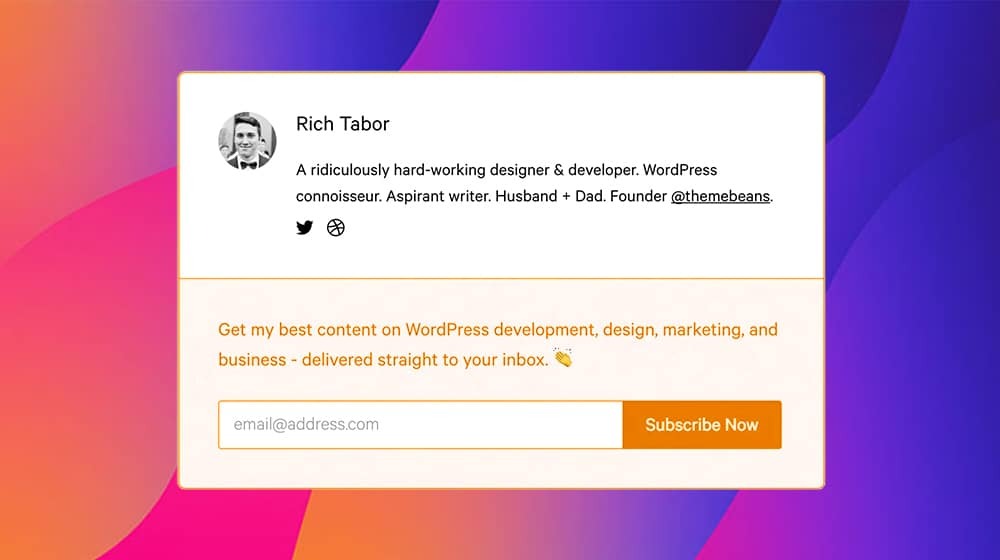
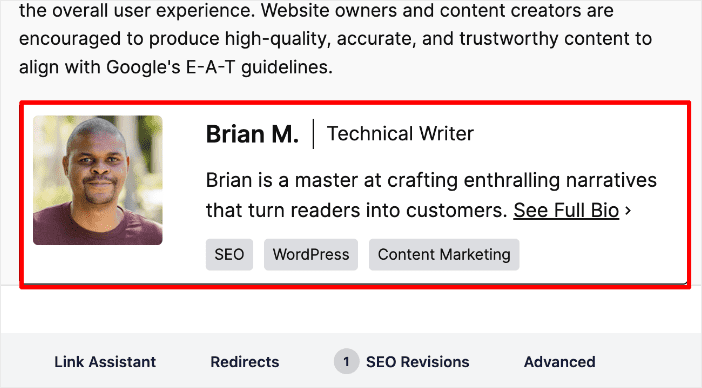
How to Structure an SEO-Optimized Author Bio
An effective author bio for SEO in 2026 balances credibility, clarity and machine readability.
1. Clear Identity
Include:
- Full name
- Role and specialization
- Years of experience in the field
Avoid vague titles like “content enthusiast.” Precision builds trust.
2. Verifiable Credentials
Mention:
- Industry experience
- Certifications or degrees where relevant
- Recognizable clients, companies or sectors worked with
Do not exaggerate. AI systems cross-reference claims across the web.
3. Topical Focus
State clearly what the author writes about. This helps search engines associate the author with specific subject areas.
Example:
“Writes about SEO strategy, AI search trends and content systems for Indian startups.”
4. Proof of Experience
Add real-world signals:
- Projects led
- Results achieved
- Publications or talks
Experience-based signals are becoming stronger than generic expertise claims.
5. External Presence
Link to:
- LinkedIn profile
- Author page on the website
- Mentions on credible platforms
This creates a connected trust graph around the author.
Case Study 1: Indian Fintech Blog Recovering from an AI Visibility Drop
An Indian fintech content platform saw a sudden decline in visibility after AI-generated search summaries started dominating results for finance-related queries.
What was happening
- Articles were anonymous or credited to “Editorial Team”
- No author credentials for sensitive financial content
- AI summaries preferred competitor sources with identifiable experts
What they changed
- Introduced named authors with finance and compliance backgrounds
- Created detailed author pages outlining years of industry experience
- Restricted each author to a single subject area such as lending or personal finance
Result
- Content started reappearing in AI-generated finance answers
- Trust-related impressions improved for high-risk queries
- Organic visibility stabilized without increasing content volume
Why this matters:
In YMYL categories, author bio SEO acts as a risk filter for AI systems. Without identifiable expertise, content is silently excluded.
Case Study 2: B2B Writing Agency Using Author Authority as a Sales Lever
A Delhi-based writing agency struggled with prospects comparing them purely on pricing, despite strong work quality.
The strategic shift
Instead of promoting services, the agency repositioned around people-led authority.
They:
- Made founders the primary authors of strategy content
- Highlighted 10+ years of domain-specific experience in author bios
- Published opinionated content tied to real client work and outcomes
Outcome
- Prospects referenced author names, not blog URLs, in discovery calls
- Sales conversations shifted from cost to credibility
- The agency closed higher-value retainers without changing pricing pages
Why this works:
AI systems and human buyers both trust identifiable experts more than faceless brands. Author authority shortens the sales cycle.
Markup and Technical Signals for Author Bio SEO
Author bios need to be readable by both users and search engines.
Author Schema Markup
Use structured data to define:
- Author name
- Job title
- Area of expertise
- Same-as links to profiles
This helps search engines correctly associate content with real individuals.
Author Pages
Each author should have a dedicated page that:
- Lists published articles
- Reinforces topical authority
- Is internally linked from all authored content
Consistency Across the Site
Author names, titles and bios must be consistent across:
- Blog posts
- About pages
- Guest contributions
Inconsistency weakens author authority signals.
Conclusion
By 2026, author bio SEO will be one of the strongest differentiators between content that ranks and content that disappears. Search engines and AI systems reward identifiable experts with consistent, verifiable experience.
For writing agencies, this shift opens a premium positioning. Instead of selling words, agencies can sell author authority systems that build long-term trust, rankings and leads.
Strong author bios are no longer about branding. They are about being selected by AI as a credible source.
FAQs
1. What is author bio SEO
It is the practice of optimizing author bios and credentials to improve trust, rankings and AI visibility.
2. Do author bios really affect SEO rankings
Yes. They strengthen E-E-A-T signals and help search engines assess credibility.
3. How detailed should an author bio be
It should clearly explain expertise, experience and focus without unnecessary fluff.
4. Is author schema necessary
While not mandatory, structured data significantly improves clarity for search engines.5. Can agencies productize author bio optimization
Yes. Many agencies now offer author authority audits and implementation as a service